
Line 'Em Up®: Strategy Board
Schultz Development ApSBoard
3.769.00 Reviews
- Version
- 2.0.25
- Installs
- 10.00K
- Age Rating
- Everyone
Screenshots
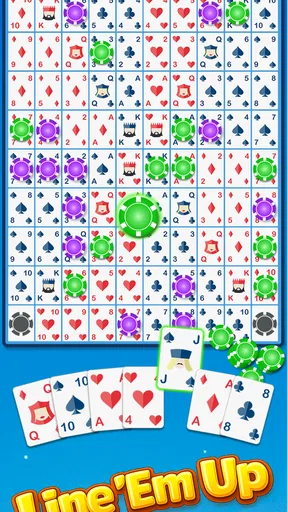




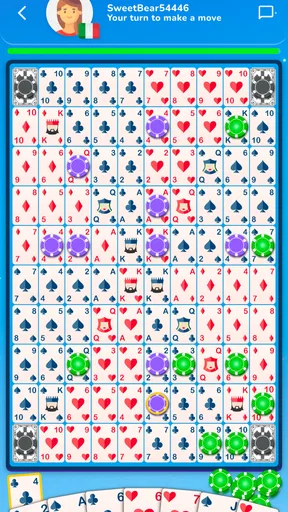
Our Review of Line 'Em Up®: Strategy Board
 Analysis by Appyee
I enjoy board games most when the rules are easy to grasp but the decisions remain interesting after the first few turns. Line 'Em Up® aims at that balance: it is a free board game from Schultz Development ApS built around quick strategic matches, either played live or spread across a longer turn-by-turn rhythm. After spending time with it, I see the main appeal clearly. It is less about flashy presentation and more about finding the right moment to place a move, read the other player, and avoid giving away an easy advantage.
That makes it a particularly natural fit for people who want a compact strategy game rather than a large collection of modes, characters, or complicated rules. You can approach a match casually, but the simple board format leaves room for planning. My overall impression is positive, although the experience depends heavily on whether you enjoy quiet, positional competition. If you want constant action, a deep campaign, or a large social community, this may feel too focused.
How the pace works in real use
The most important choice is whether you play live or use the longer turn format. A live match suits a short break when both players are available at the same time. It gives each decision more urgency, because hesitation affects the flow of the game and the opponent can respond while the position is still fresh in your mind.
The 24-hour-per-turn option changes the character of the game. Instead of treating it like a quick contest, I found it more useful as a background match that I could revisit during the day. That format works well for friends with different schedules, especially when neither person wants to reserve a full uninterrupted session. It also gives you time to inspect the board carefully rather than relying on a rushed instinct.
There is a subtle trade-off here. Slower turns can improve the quality of decisions, but they can also reduce momentum. A live board feels like a complete activity; a delayed match becomes something you check between other tasks. I would choose the live option for a planned play session and the longer format for an ongoing rivalry with someone who is not usually online when I am.
The basic strategic tension comes from trying to build your own line while preventing the opponent from completing theirs. That sounds straightforward, but the best move is not always the one that makes immediate progress. Sometimes a defensive placement is stronger because it limits the opponent’s next choices. Other times, creating two possible threats is more valuable than finishing the most obvious line.
The useful habit is to examine the opponent’s next move before celebrating your own. In a game with a compact board, one overlooked opening can matter more than several attractive-looking placements. I recommend mentally checking three things before committing: whether your move creates a future threat, whether it blocks an immediate answer, and whether it leaves another route open for the other player.
Why the simple board can still reward practice
Line 'Em Up® is approachable because the premise does not require a long tutorial or a large rulebook. That is helpful when introducing it to a friend who normally avoids strategy games. The challenge comes from recognizing patterns rather than learning a large set of special abilities. As you play more, you start noticing how early placements shape the middle of the match and how a seemingly harmless move can restrict your options later.
One practical technique is to avoid filling the same area of the board automatically. Concentrating moves in one place may look efficient, but it can make your plan predictable. I had better results when I considered whether a move could support more than one future line. This does not guarantee a win, but it makes each placement more flexible and reduces the chance of running out of useful options.
Another worthwhile approach is to treat the opening as information gathering. Rather than revealing your entire plan immediately, use the first few moves to see whether the opponent prefers aggressive progress or defensive blocking. Against a player who rushes toward a visible line, a calm response can often create a counter-threat. Against someone who blocks everything, patience becomes more important than trying to force a quick finish.
What happens during heavier play
For performance expectations, this is a focused board game rather than a visually demanding action title. The board itself is the center of attention, so I would expect it to feel lighter on a phone or tablet than games with animated environments, large downloads, or continuous real-time effects. That makes it suitable for short sessions and for devices where conserving attention and battery matters more than visual spectacle.
Still, “light” does not mean every situation feels identical. Live play asks more from your attention because the match has to maintain a shared rhythm. If you are switching repeatedly between the game and other apps, the experience can feel less immediate than when you stay with the board. The delayed-turn format is more forgiving in that respect because it does not require both players to remain focused at once.
Heavy use is most likely to come from repeated matches rather than from one unusually long board. If you play several games in succession, the main strain is mental: similar positions can begin to blur together, and it becomes easier to overlook a threat. I recommend taking a short pause between matches, especially after a close loss. Returning with a fresh view is often more useful than immediately trying to recover the mistake in another game.
A good everyday scenario is a small group of friends who cannot meet at the same time. One person starts a match in the evening, another responds during a commute or lunch break, and the game continues without demanding a shared appointment. That is where the longer-turn design feels most practical. It turns a board game into a low-pressure conversation starter, even when the actual conversation happens elsewhere.
On the other hand, I would not choose it as the main game for a party. The format is built around individual decisions and reading a board, not around a room full of spectators or rapid group participation. A physical party game or a faster multiplayer title would be better when several people want to join at once.
Stability and recovering your place
The current version is 2.0.25, and the game has been available since January 4, 2022. Those details suggest a product with time behind it rather than a brand-new experiment. In everyday use, the most important reliability question is not whether a match looks elaborate; it is whether you can return to an ongoing game without losing track of the position or the turn.
The longer-turn format naturally makes recovery more important. If you only open the game occasionally, you need to recognize which matches require attention and which are waiting on the other player. I found that this style rewards a simple personal routine: check the board, identify the immediate threat, decide whether to attack or defend, and leave the game only after you know what your next priority will be.
That routine is also useful if you are interrupted during a live match. Instead of trying to remember every detail, focus on the current line possibilities and the opponent’s strongest immediate response. The board is compact enough that rebuilding your understanding should be manageable, but a rushed exit can still cost you a turn mentally even if the game itself preserves the position.
I would describe the experience as best suited to players who value continuity over spectacle. There is no reason to expect the same kind of recovery concerns found in a large, constantly streaming game, because the core activity is a contained board state. Even so, your own connection and attention matter more in live play than in the 24-hour format. If your daily routine is unpredictable, the slower option is the safer choice.
The rating sits at about 3.7 from more than 600 ratings, with over 60 written reviews. I read that as a sign of a mixed but meaningful audience rather than universal agreement. The game’s focused design will appeal strongly to some players and feel limited to others. That distinction is important: a moderate average does not tell me that the concept fails, but it does fit my impression that the game is more selective than broadly entertaining.
Device fit, cost, and practical limits
The game is free to install, with optional in-app purchases ranging from $1.99 to $99.99 per item. That makes trying it straightforward, but I would still advise checking the purchase screen carefully before handing the device to a child or a less experienced user. The presence of a free entry point is convenient, while the wide purchase range means the game deserves the same basic spending awareness as other free-to-play products.
It carries an Everyone age rating, which matches the clean, abstract nature of a board-focused strategy experience. Families looking for a calm game can consider it, although age suitability does not automatically mean every child will enjoy the planning. Younger players may understand the objective quickly but need time to recognize why blocking and positioning matter.
The minimum operating system is Android 7.0. That gives the game a relatively broad device range, including older phones that cannot run many newer games. I would expect the clearest benefit on modest hardware to be the restrained nature of the board experience: there is no obvious need for a powerful graphics processor simply to understand the position. If your phone is old, the more relevant question is whether the operating system meets that requirement and whether the screen is comfortable for careful board inspection.
Screen size can affect the experience more than raw power. On a small phone, individual spaces may require more careful tapping, especially when you are playing quickly and trying not to misread a developing line. A tablet or larger phone should make the board easier to scan, but portability is one of the reasons this type of game works well in the first place. I would choose a larger screen for serious matches and a phone for casual turns.
Resource demands also depend on how you use it. A few considered turns should be an easy workload for most compatible devices. Repeated live sessions, frequent switching, or leaving the game open while doing other things can be less efficient than opening it only when you are ready to play. My practical recommendation is simple: use live mode when you can give the game your attention, and use the delayed format when your device and schedule are likely to interrupt you.
Where it stands beside familiar board-game choices
Compared with a physical board game, this version is more convenient for remote play and easier to start without finding a table or setting up pieces. The cost of entry is also lower because the game itself is free. The trade-off is that a phone cannot provide the same tactile satisfaction as moving physical pieces, and the screen makes the social atmosphere more personal than communal.
Compared with a traditional turn-based board app, its strongest distinction is the choice between immediate live play and a 24-hour turn rhythm. Some board apps are designed mainly for quick matches, while others assume that players will return over a much longer period. Here, the two approaches make it easier to adapt the game to a friendship or schedule. That flexibility is more valuable than it may seem, but only if both players agree on the pace.
Compared with large strategy games featuring many units, maps, or upgrade systems, this is much easier to learn and much faster to explain. The cost is depth of a different kind. You are not building an empire or managing a long campaign; you are refining your reading of a single board. Players who enjoy elegant constraints may find that satisfying. Players who need progression, collection, or variety may run out of reasons to return.
It also differs from purely random casual board games. Winning depends less on hoping for a favorable result and more on noticing threats and choosing placements carefully. That gives losses a useful quality: you can usually review the position and identify where your plan became vulnerable. However, players who prefer luck to soften competitive pressure may find the direct strategic responsibility less relaxing.
Who should install it, and who should pass
I would recommend it to friends who enjoy short strategic contests, especially when they want to play remotely without coordinating a long session. It is also a good candidate for someone who likes learning through repetition. The rules are approachable, but the board gives enough room for small decisions to become meaningful. New players can start casually while experienced players can focus on tempo, blocking, and creating multiple threats.
It is less suitable for anyone looking for a campaign, a story, rich audiovisual presentation, or a large selection of unrelated game modes. I would also skip it if you dislike waiting for another player. The 24-hour-per-turn option is useful, not mandatory, but the game’s appeal is tied to thoughtful two-player interaction. If you need constant activity even when an opponent is unavailable, another board or puzzle game may serve you better.
Before starting, agree on the intended pace. This is one of the most useful practical tips I can offer. A friend who expects a live match may be frustrated by a slow exchange, while someone who prefers relaxed turns may dislike being pressured to respond immediately. Choosing the format together prevents a scheduling problem from being mistaken for a problem with the game itself.
I also suggest treating the first few matches as learning sessions rather than tests of skill. Focus on identifying threats and noticing how one placement changes the available lines. Do not judge the game solely by whether the first match feels exciting. Its stronger qualities appear when you start anticipating the opponent rather than simply reacting to the most visible move.
My performance verdict
Line 'Em Up® succeeds because it keeps the board readable and the central decision clear. Its speed expectations are modest, its hardware requirements are accessible for devices running Android 7.0 or later, and its two pacing options make it practical for both planned sessions and scattered daily play. I would not describe it as a demanding game from a device perspective; the real demand is concentration.
The limitations are equally clear. The focused format may feel repetitive if you need constant novelty, and the longer-turn system loses some energy when players respond irregularly. The free model is inviting, but the optional purchases mean I would keep an eye on spending, particularly on a shared device. These are not reasons to reject it, but they should shape your expectations before you begin.
With more than 10K installs, it has found a modest audience, and I can understand why. It offers a clean way to challenge a friend without requiring a large time commitment or a powerful phone. My recommendation is strongest for patient players who enjoy spotting patterns and making defensive choices. If that sounds like you, this is a compact strategy game worth trying before you decide whether its deliberately narrow design has enough staying power.
For me, the best use is a continuing match with a friend who appreciates thoughtful turns rather than instant rematches. I would install it for that purpose, use live play when we are both free, and switch to the slower format when our schedules separate. Just do not expect a full board-game collection in one app. What it offers is more specific: a small, accessible contest where one careful placement can change everything.
Verdict
Strengths of Line 'Em Up®: Strategy Board
- Simple rules make it easy for new players to start quickly.
- Short matches fit well into quick gaming sessions.
- Strategic positioning keeps each move meaningful.
- Clean board-focused design makes gameplay easy to follow.
- Works well for casual play with friends or family.
Limitations of Line 'Em Up®: Strategy Board
- Limited variety may make repeated matches feel familiar over time.
- Strategic depth can feel modest for experienced board-game players.
- Finding a challenging opponent may depend on the available player base.
- Mistakes can be difficult to recover from once the board fills up.
- Some players may prefer more game modes or customization options.
Similar Picks in This Category
View All
Ludo King®
Gametion4.1

Ludo
Yarsa Games4.6

Tile Master® - Matching Game
Higgs Studio3.6

Checkers Online
CC Games4.6

Dominoes
Loop Games4.7

Chess
Chess Prince4.6
Frequently Asked Questions
What is Line 'Em Up®: Strategy Board and how is it played?
Line 'Em Up®: Strategy Board is a strategic board game focused on planning, positioning, and creating lines before your opponent does. After installing it, players take turns placing or moving pieces according to the game’s rules, trying to complete the required pattern while blocking opposing moves. It is easy to understand at first, but winning consistently requires careful observation and forward planning.
Is Line 'Em Up®: Strategy Board suitable for beginners?
Yes, the game is accessible to beginners because its central objective is straightforward and the board-based format is easy to follow. New players can learn the basic mechanics after a few turns, while more experienced users will find additional depth in anticipating the opponent’s strategy. It is a good choice for casual players who enjoy short, thoughtful matches rather than fast arcade action.
Can I play Line 'Em Up®: Strategy Board offline?
The game is primarily designed around board-game sessions, but offline availability can depend on the specific version, device, and mode selected. If you want to play without an internet connection, check the app’s store description and test a match after installation. Online features, advertisements, updates, or multiplayer options may require connectivity, so offline access should not be assumed for every function.
Does Line 'Em Up®: Strategy Board support multiplayer gameplay?
Line 'Em Up®: Strategy Board is best enjoyed as a competitive experience, and multiplayer availability may vary according to the platform and version you download. Some releases may support playing against another person on the same device, while others can include computer-controlled opponents or online functionality. Review the in-app mode selection and store listing to confirm which multiplayer options are currently available.
Is Line 'Em Up®: Strategy Board free to download, and are there in-app purchases?
The download price and monetization model can differ between Android and iOS, as well as between regional store listings. Before downloading, check whether the app is marked free or paid and review the purchase information shown on its store page. If the game includes advertising, premium features, or optional purchases, these details should also be visible in the listing and may vary after updates.
Play our best games!


